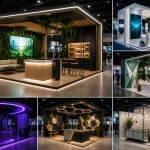

The modular vs custom question is one of the first decisions every exhibitor faces, and the wrong answer is expensive either way. Buy a one-off custom stand when you exhibit six times a year and you’re rebuilding something disposable. Buy a modular system for a flagship annual event and your stand looks like every other hire booth on the floor.
The right answer depends on how you exhibit, not on which option sounds more impressive. Here’s a direct comparison across the factors that matter.
What Is a Custom Exhibition Stand?
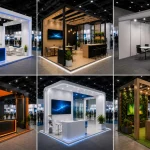
A custom stand is designed and built specifically for your brand, your event and your floor space allocation. There’s no off-the-shelf framework. The structure, the materials, the layout and the graphics are all created from scratch to your brief. Custom Exhibition Stands offer the highest degree of brand expression and design flexibility, but they’re more expensive to produce and the structural elements are typically not designed for repeated reconfiguration.
What Is a Modular Exhibition Stand?
A modular stand uses a standardised structural system, typically aluminium extrusion or a connector-based framework, that can be assembled in multiple configurations. Graphics are usually on interchangeable fabric panels or snap frames. The structural components are reused; the graphics are updated when needed. Modular systems cost less per event over time but require upfront investment in a quality system, not an off-the-shelf kit.
Cost Comparison
Upfront, a custom stand typically costs more than a modular system of equivalent size. A custom 3×3 starts from around $5,000-$12,000. A quality modular 3×3 system starts from $4,000-$8,000. The difference narrows with size.
Over time, the modular system wins decisively for frequent exhibitors. A modular system used at four events per year amortises its cost over those events. Graphics updates between shows cost $500-$1,500. A custom stand used four times per year and replaced annually costs several times more per event.
Custom wins on a per-event basis when you exhibit once or twice a year for a single flagship event where the stand itself is a significant brand statement. At that frequency, the cost-per-event of custom isn’t dramatically higher than modular, and the brand impact difference is substantial.
Brand Impact
A well-executed custom stand will almost always make a stronger brand impression than an equivalent modular system. Custom allows asymmetric structures, curved walls, cantilevered elements, custom joinery and integrated digital displays that are difficult or impossible with standard modular extrusion. The visual distinctiveness of a custom stand says something about the brand’s confidence and investment.
That said, a poorly specified custom stand with cheap graphics and mediocre finishes will underperform a well-specified modular system with premium tension fabric prints and quality lighting. The execution matters as much as the structural type.
Flexibility and Reuse
Modular systems are built for flexibility. A 6×3 system can often be configured as 3×3, 3×6 or extended to 6×6 with additional components. Graphics swap in hours. The system travels to Brisbane, Sydney, Melbourne and Perth without rebuilding.
Custom stands are less flexible by nature. Some custom structural elements can be retained and refreshed, but deep reconfiguration requires rebuilding. For exhibitors with consistent floor plan allocations across events, this isn’t a constraint. For exhibitors whose footprint changes with each event, it is.
The Hybrid Approach
Many of Brij & Co’s recurring clients use a hybrid: a bespoke structural core that reflects their brand identity, combined with interchangeable graphic panels and modular accessories. The structure looks and feels custom on the floor. The graphics update between events. The accessories adapt to different footprints. This approach captures the brand impact of custom with the per-event economics of modular.
Frequently Asked Questions
How many events per year makes a modular stand cost-effective?
At three or more events per year, a modular system typically delivers a better return than annual custom builds. At one to two events per year for flagship industry shows, custom or hybrid is usually the right choice.
Can a modular stand look as good as a custom stand?
A high-spec modular system with quality tension fabric graphics, integrated lighting and premium accessories can be visually competitive with an equivalent custom build. The structural differentiation is less obvious at ground level than the graphics quality. Invest in high-resolution, accurately colour-matched dye-sublimation fabric printing and the modular structure becomes far less of a limiting factor.
Can I convert my custom stand into a modular system later?
In some cases, yes. If the custom stand includes replaceable graphic panels or standard aluminium components, we can design a refresh strategy that converts elements to modular. For fully custom bespoke structures, this is more difficult. Discuss your long-term exhibition plans at the briefing stage so we can design for future flexibility.
What is the difference between a hire stand and a modular stand?
A hire stand is a generic system that anyone rents. A modular stand is owned by you, built to your brand specification and reused for your events. The difference in visual quality and brand consistency is significant.
Which option is better for a first-time exhibitor?
For first-time exhibitors testing an event, a hire stand or modular system makes more sense than a full custom build. Once you’ve validated the event’s commercial value, investing in a custom or hybrid stand for the following year is a sensible progression.
Not sure which approach is right for your exhibition schedule? Brij & Co advises on the most cost-effective strategy for your specific event calendar. Contact us for a free consultation.