
Cafe Fitouts · Coffee Shop Fitouts · Cafe Counters
Cafe Fitouts Built Around How Your Coffee Gets Made
Cafe counters, back bars and seating joinery made in our Sydney, Melbourne and Brisbane workshops, laid out so the queue keeps moving.
In a cafe, the fitout is the workflow. If the grinder is on the wrong side of the machine, or the pickup point sits in the middle of the queue, you lose seconds on every coffee for as long as the lease runs. We plan the counter around the order, make, serve path first, then design the look, then build the counter, back bar and shelving in our own workshop.
Why cafe owners use Brij & Co
Get A QuoteCounters built in-house
Cafe counters and back bars made in our own workshops, not ordered from a catalogue.
Workflow first
The machine, grinder, knock tube, fridges and pickup point are placed before the finishes are chosen.
Built for steam and milk
Moisture-resistant board, sealed edges and cleanable surfaces on every counter.
Three cities
Cafe joinery built in Sydney, Melbourne or Brisbane, close to your site.
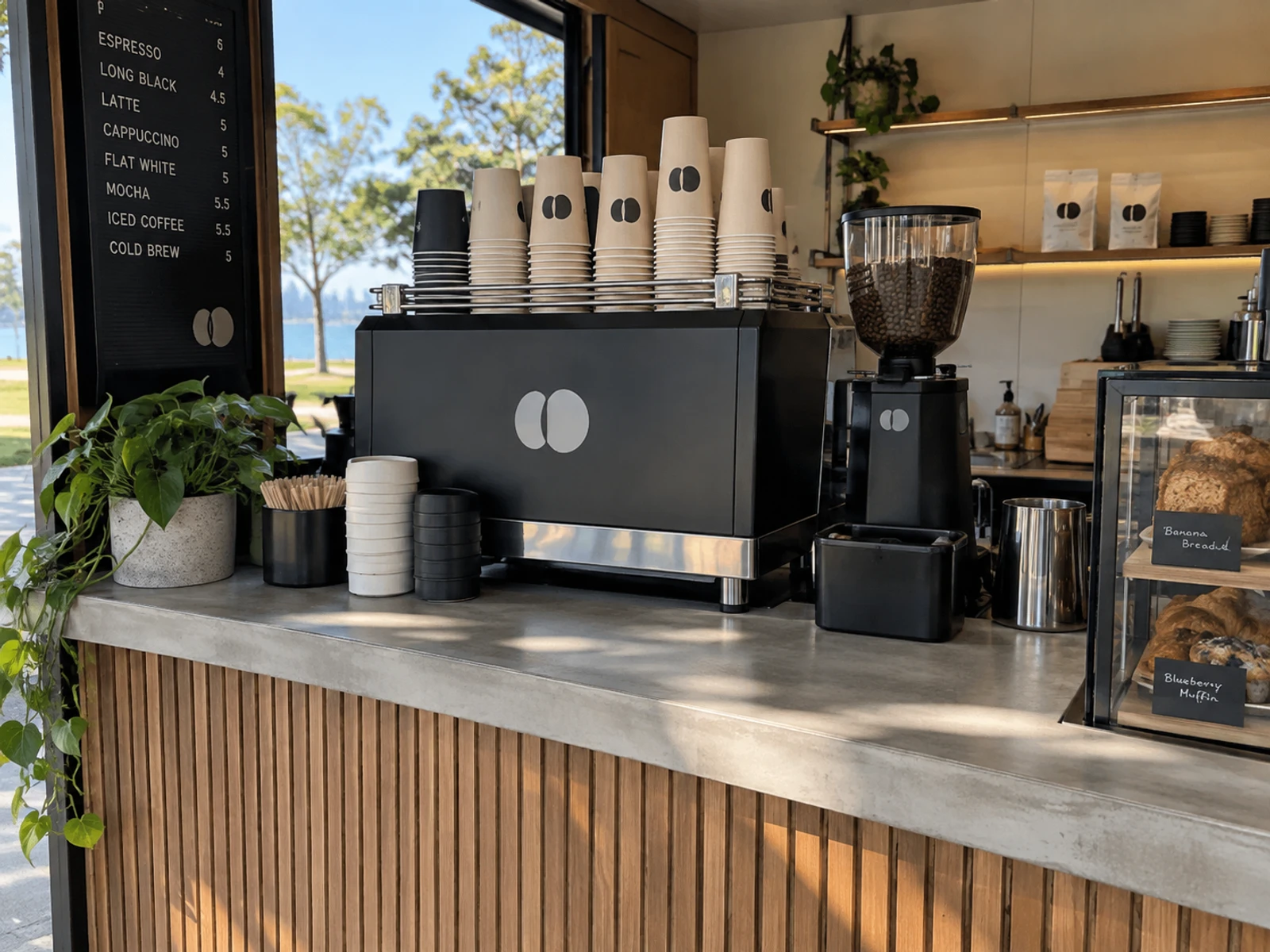
Designing the coffee station
A good coffee station has the grinder within reach of the group heads, a knock tube cut into the bench below the portafilter, milk fridges under the steam wands, and cups stored on or above the machine where they stay warm. The barista should be able to make a coffee without taking a step.
The customer side matters as much. Ordering, paying and collecting should happen in that order along the counter, so people who have paid move away from people still deciding. We draw both sides before we price anything.
What we build for cafes
Cafe counters
Front counters with display cabinet cut-outs, EFTPOS and register points, a menu or brand panel on the customer side, and storage behind.
Back bars and shelving
Back-bar joinery for retail coffee, cups and syrups, with open shelving that is easy to wipe down.
Food display
Joinery around refrigerated and ambient display cabinets, with the ventilation gaps their motors need.
Seating
Banquettes, window benches and leaners built to the room, often the cheapest way to add covers.
Coffee kiosks
Freestanding coffee kiosks for shopping centres and office lobbies.
Signage and graphics
Menu boards, window graphics and wall graphics printed and cut in-house, UV-laminated as standard.
Approvals and food safety
Before you can trade, your council has to be satisfied the premises meet the Food Standards Code, Standard 3.2.3 (Food Premises and Equipment). In practice that means surfaces that are smooth, impervious and easy to clean, a dedicated hand basin with warm water, enough storage, and floors and walls that can be kept clean. Most councils want to see the fitout plans before they register the food business, and some will also want a development or complying development approval for a new cafe.
We design the joinery to those rules from the first drawing and coordinate the plumber, electrician and refrigeration trades. If you are taking over an existing cafe, we will tell you what can be kept and what will not pass.
Five questions to answer before your cafe fitout
- What is your menu? Coffee and pastries need very different services from a cafe with a hot kitchen. Cooking usually means an exhaust hood and more approvals.
- How many covers? Seats drive the layout, the number of toilets the building needs and often the approval path.
- What services does the tenancy have? Power, water, waste and grease trap capacity decide what equipment can go where.
- Which machine and grinders? Give us the models early. Their sizes and service connections set the counter.
- When do you want to open? Everything is scheduled back from it, including the council inspection.
What does a cafe fitout cost?
A cafe fitout is priced on the counter and joinery package, the services work and the finishes. The biggest swing is cooking: a coffee-and-cabinet cafe costs far less than one with a commercial kitchen, because of the exhaust, plumbing and electrical work. We give you an itemised quote once the layout is agreed, so you can see where the money goes. Our fitout cost guide explains the general cost drivers.
For full restaurants and bars, see restaurant and bar fitouts. For a counter on its own, see shop counters.
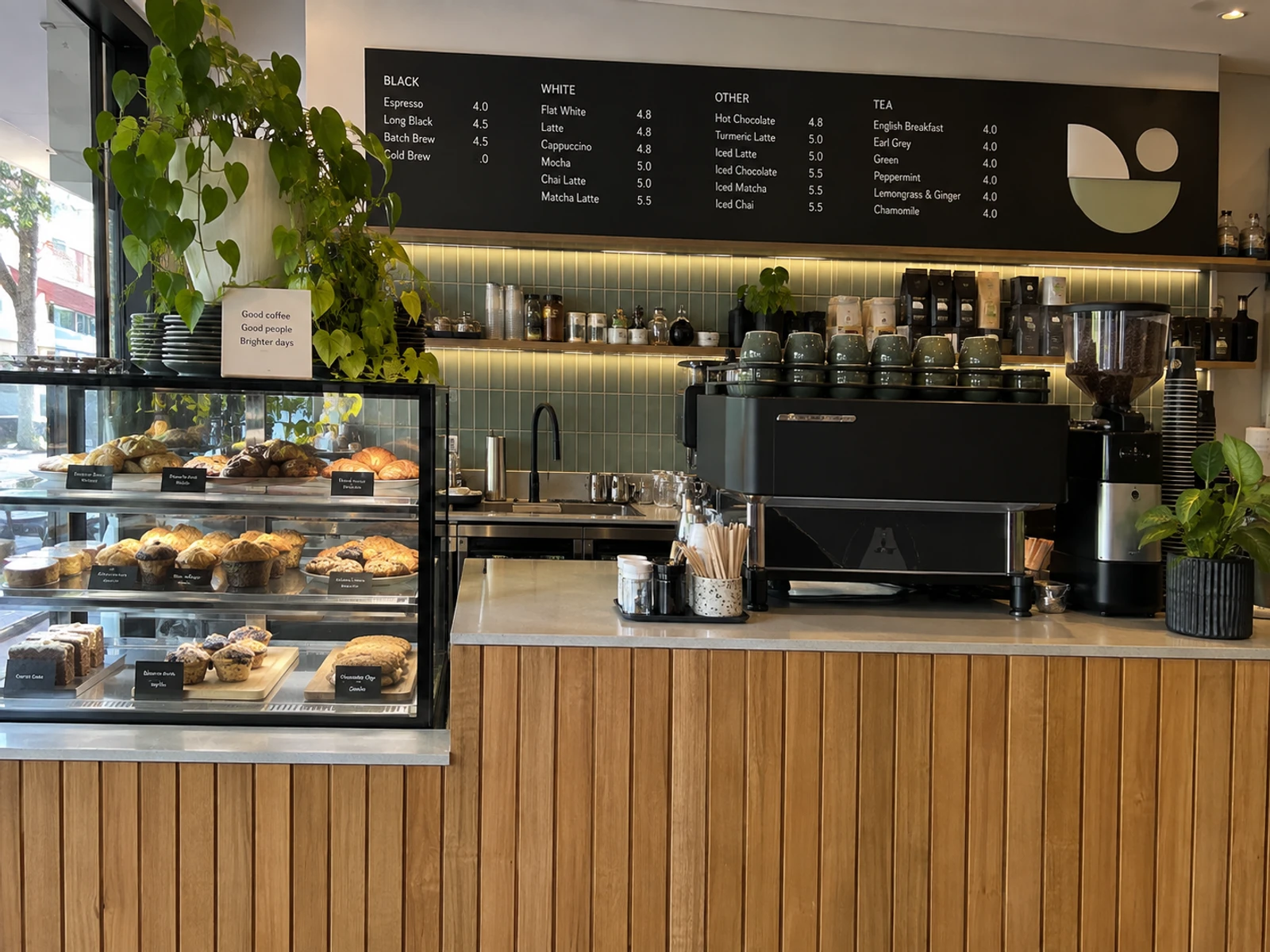
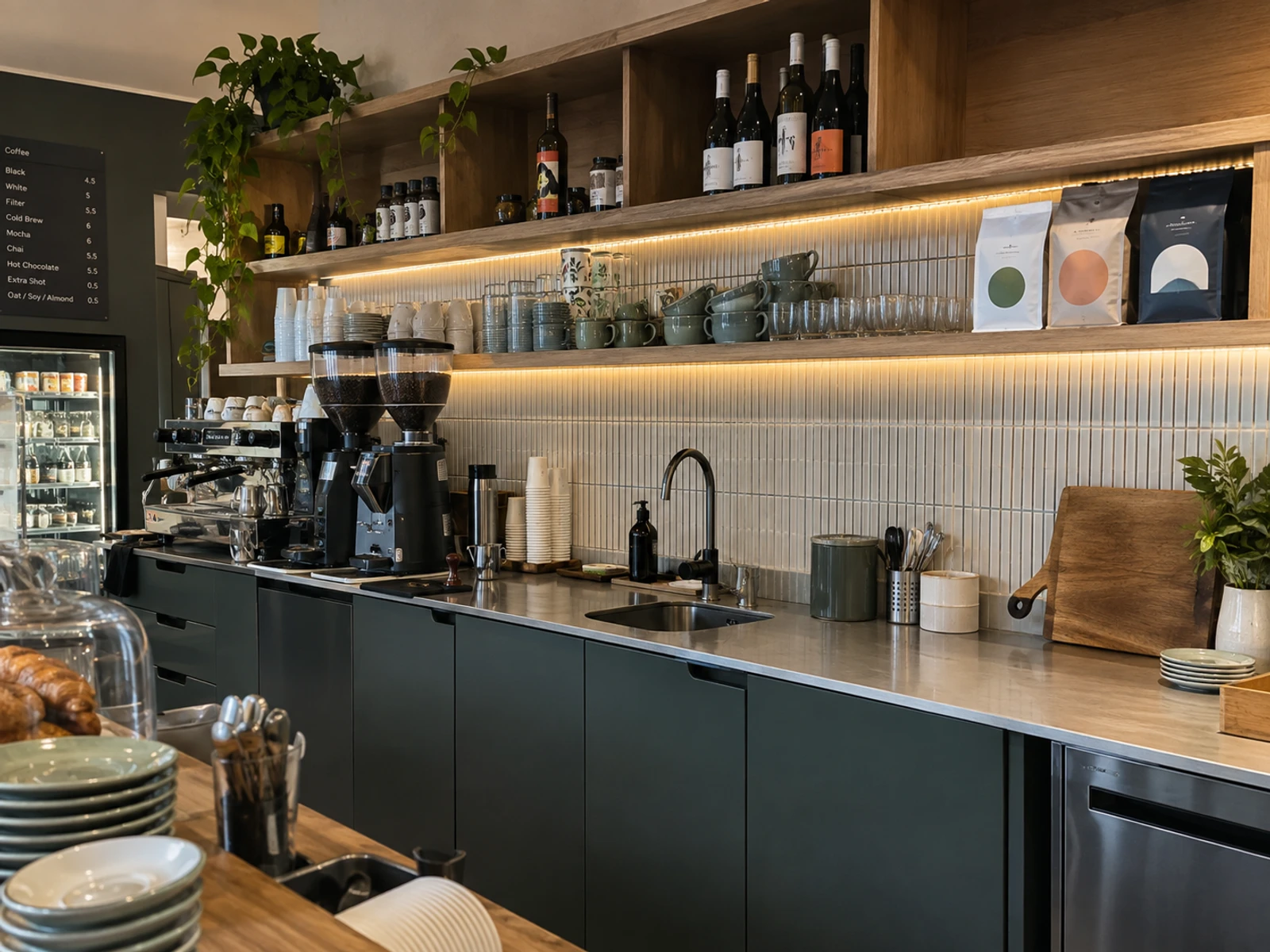
Cafe fitout work
Google Reviews
Rated 5.0 from 8 Google reviews
I could not recommend Brij and Co enough! We've worked with a few stand builders over the years, but Neil and the team are the best at what they do.
The stand was beautifully executed, effective, and delivered at a very reasonable price.
They perfectly brought our vision for the stand to life. Since upgrading from more basic setups, we’ve been noticeably busier at shows, with customers often lining up around the stand to engage with our products. As a start-up surrounded by much larger, more established brands, that kind of impact is incredibly valuable.
The team is also warm, friendly, and super helpful during the stressful bump-in process, which is also a huge plus.
We had such a great experience working with Brij & CO for our stand at the Sydney Hair Festival. The booth was beautifully executed, and the quality and attention to detail really stood out. Everyone loved it!!
Neil was always very responsive and easy to deal with, and Anna was incredibly supportive and helpful throughout the process. They also created oversized props for us, which turned out amazing and made a big impact at the event.
Looking forward to next year's expo!
Brij&Co have built our (Tilley Soaps) Gift Fair stands for several years now and always do a fantastic job. Professional, reliable, and great attention to detail. Thanks to Neil and the team, we highly recommended.
We had such a beautiful experience with Brij & Co. They could bring my vision to life. Organising those type of events can be stressful but they made the experience very pleasant and easy. I will definitely be using their services again BKT (Beauty Keeps Transforming) in our next hair and beauty expo. Thank you so much Anna and Neil.
Brijnco is hands down the best fair stand manufacturer we've worked with. We were impressed by their innovative designs and commitment to delivering exactly what we needed for our event. The team at Brijnco is not only creative but also highly responsive. They listened to all our requirements and ensured everything was perfect. If you need a stand that stands out, Brijnco is your go-to choice!
Planning a cafe?
Send the address, your menu, the machine you will use and your opening date. We reply within one business day.
Frequently Asked Questions
How long does a cafe fitout take?
As a guide, a small cafe takes around three weeks once designs and approvals are in place. It depends on the design, the services work and the council inspection, and we give you a dated programme with the quote.
Can you build just the cafe counter?
Yes. We build and install cafe counters, back bars and coffee stations on their own for owners and builders.
Do you do cafe fitouts in Melbourne and Brisbane?
What materials do you use for cafe counters?
Moisture-resistant board with sealed edges is standard, finished in laminate, timber veneer, paint or tile, with stone, solid surface or compact laminate tops. Around the machine we leave ventilation and access for servicing.
Do I need council approval for a cafe fitout?
You will need your food business registered with council, and most councils check the fitout against the Food Standards Code first. A new cafe may also need a development or complying development approval. We confirm the path when we quote.