
Sustainability
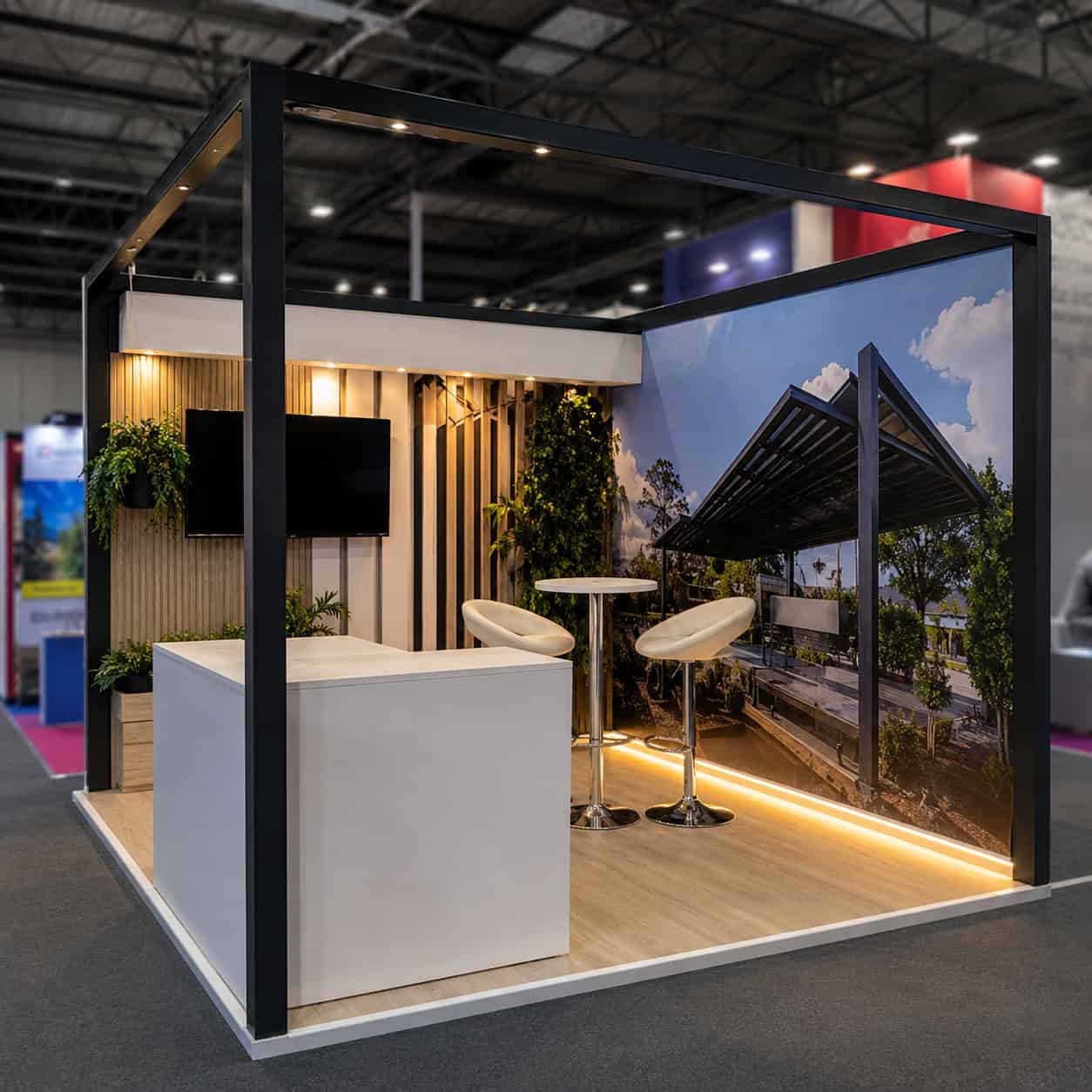
Building stands that get used again, not thrown away
A trade show stand can last one day or ten years. The difference comes down to three things: how it is designed, what it is made from, and whether anyone plans to use it again. We build for the second option.
Most of the waste in the exhibition industry is avoidable. Stands get custom-built for a single show, trucked in, stood up for three days, then skipped. We have spent more than 20 years doing it a different way, from our own workshops in Sydney, Melbourne and Brisbane. Reusable frames. Recyclable panels. Graphics you can swap out instead of scrap. Offcuts that go back on the rack rather than into the bin.
This page explains, plainly, what that looks like in practice, so you can judge it for yourself.
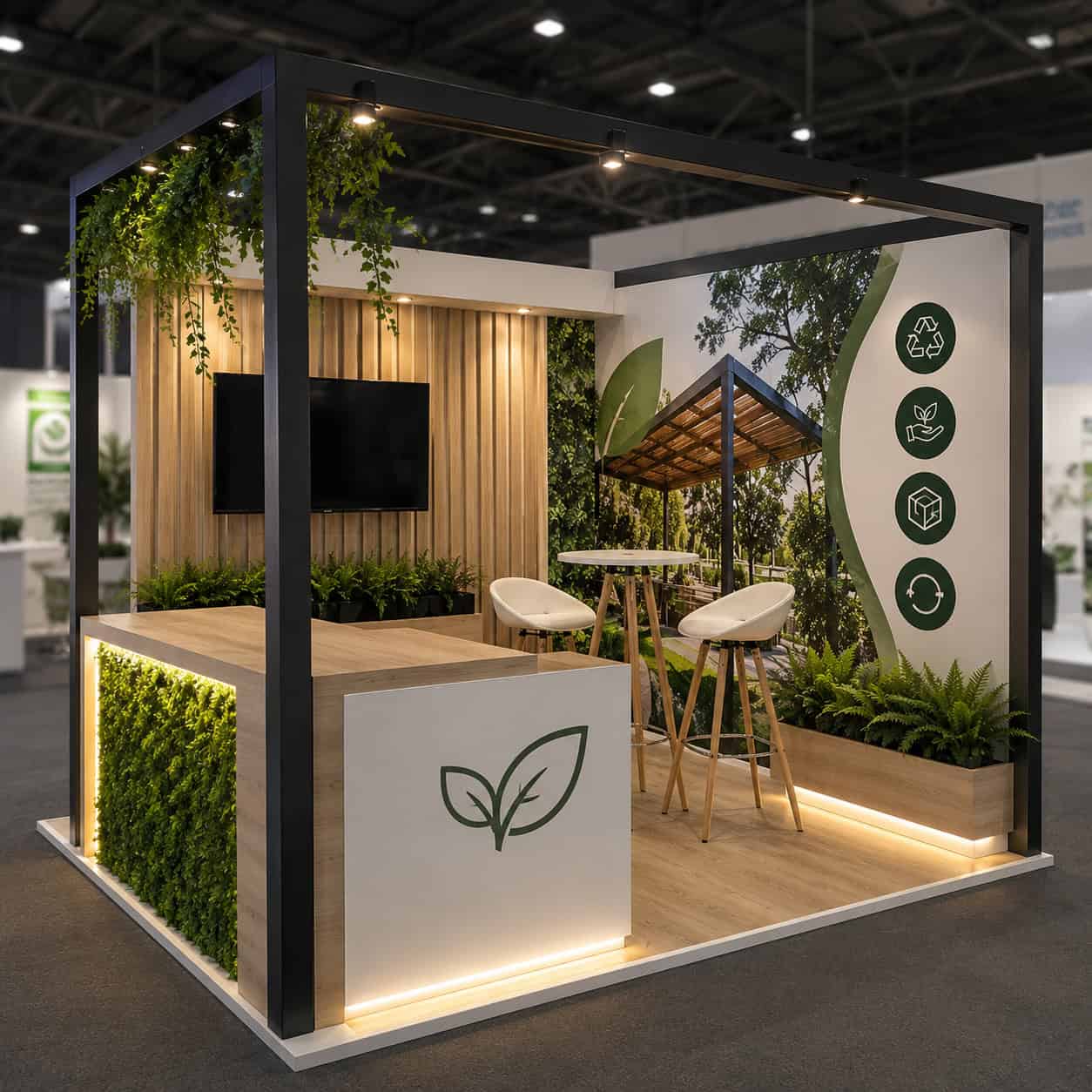
What sustainability means for an exhibition stand builder
For us it is not a slogan on a wall. It is a set of decisions we make on every job, from the first design sketch to the freight run home.
Because we design, fabricate, install and pack down in-house, we control the whole chain. There is no third party cutting corners on materials or freight that we cannot see. That control is what makes real reductions possible rather than just claimed. When a client's stand can be stored, refreshed and rebuilt for the next show, we are the ones who store it, and we are the ones who rebuild it.
The short version: we try to design out waste at the start, reuse whatever we can in the middle, and recycle what is left at the end.
The four Rs, applied to exhibition stands
Reduce
The biggest saving happens on the drawing board. A stand designed around a reusable system uses far less raw material over its life than a one-off custom build that gets scrapped. We steer clients towards designs that can work again, and we size structures to avoid the offcut waste that comes from odd, one-time dimensions.
Reuse
Aluminium framing systems come apart and go back together for years. Fabric graphics can travel to the next show. Furniture from hire stock does dozens of events. A custom stand we have built and stored can come back with fresh graphics for a fraction of the material of a new build.
Repurpose
Panels that no longer suit one stand get cut down and used on another. A large backwall becomes several smaller panels. Timber features from one job become substructure on the next. Not everything needs to keep its original shape to keep its usefulness.
Recycle
Aluminium, timber, cardboard and clean board offcuts are separated for recycling rather than going to landfill as mixed waste. What cannot be reused ends its life in the right stream.
Materials we build with
Materials decide most of a stand's footprint, so this is where we pay the closest attention.
- Aluminium framing: Modular aluminium systems are the backbone of our reusable stands. They come apart cleanly, store flat, rebuild in a new configuration, and are fully recyclable at end of life.
- Boards and surfaces: We favour panel materials that can be recycled or reused, and reboard and honeycomb board where a lighter, recyclable surface will do the job. Lighter panels also cut freight weight, which cuts fuel.
- Timber: For custom features we look to responsibly sourced and recycled timber. (See the “Please confirm” list regarding specific certifications.)
- Fabric graphics: Tension-fabric graphics pack down small, travel well, and can be reprinted or replaced without rebuilding the frame behind them.
- LED lighting: LED fittings draw a fraction of the power of older lamps and last far longer, so fewer get thrown away.
Designing stands for a second life
This is where an in-house builder can do something a broker cannot. When we design a custom stand, we ask a question up front that changes everything downstream: will you exhibit again? If the answer is yes, we design the stand so it can be stored and reconfigured, not landfilled. We keep it in our facility between shows, check and maintain it, update the graphics when your message changes, and rebuild it for the next event. You get a fresh-looking presence each time without paying for a full new build, and far less material ends up as waste.
Modular and hire stands take this further. A hire stand might do 30 or 40 events in its life, with different brands and graphics each time. That is reuse at a scale a single custom build cannot match, and it is often the more sensible choice for regional shows or first-time exhibitors.
In the workshop
Our fabrication happens in our own workshops, which means we see and manage the waste directly.
Off cuts go back on the rack for the next job rather than to the bin. A panel that is too small for one stand is often exactly right for another.
Panels are maintained and stored so they last across many events instead of being remade each time.
Crates and cases are built to protect stock and get reused, so the same case ships a stand out and brings it home, show after show.
We separate aluminium, timber, cardboard and board offcuts for recycling.

Freight and logistics
Trucks and travel are a real part of an exhibition stand's footprint, and there are only two honest levers: move less, and move it efficiently.
Stands that flat-pack take up less space, so more fits on each truck and fewer trips are needed. Our depots in Sydney, Melbourne and Brisbane mean a lot of east coast work is served locally rather than freighted across the country. When we load a truck we pack it properly, because a half-empty truck is wasted fuel. We plan runs so a delivery and a pack-down can share a trip where the schedule allows.
Materials we build with
Materials decide most of a stand's footprint, so this is where we pay the closest attention.
Graphics and signage
- We use tension-fabric graphics that can be reprinted and reused rather than single-use rigid panels wherever the design allows.
- Fascia and sign panels are stripped and reused, with only the lettering peeled and replaced, so the substrate does many shows.
- Print offcuts and old substrates are recycled rather than binned.
Power and lighting at the show
- LED lighting throughout, which cuts the power a stand draws on the floor.
- Timers and switching so lights and screens are not running when the hall is closed.
- We advise clients on lower-energy options for their own equipment on the stand.
In the office
- Small things, done every day, across a 20-year business.
- Quotes, invoices and drawings sent as PDFs rather than printed and posted.
- Paper and cardboard recycling, and LED lighting in our own spaces.
- Equipment that still works gets reused or passed on rather than dumped.
Helping you exhibit more sustainably
If sustainability matters to your business, it probably needs to show up on your stand too. We can help with that.
We will design a stand you can reuse, store it for you between shows, and rebuild it with updated graphics next time. We can steer you towards modular or hire options where a full custom build is not the right call. And we can put together a stand that looks the part while quietly using less material and less power than the one next to it. Ask us about it when you get a quote, and we will tell you honestly what is worth doing for your events.
Frequently Asked Questions
Are exhibition stands sustainable?
They can be, and a lot depends on the builder. A custom stand built for one show and then skipped has a large footprint. A stand built from reusable aluminium framing and recyclable panels, stored and rebuilt for later shows, has a much smaller one. At Brij & Co we design for reuse and recycle what is left.
Can you reuse an exhibition stand?
Yes. We store custom stands between events, maintain them, update the graphics, and rebuild them for the next show. Modular and hire stands are designed to be reused many times over with different brands and graphics.
What materials in an exhibition stand can be recycled?
Aluminium framing is fully recyclable, and it is reusable long before it reaches that point. Timber, cardboard packaging and clean board offcuts can be recycled too. We separate these streams in our workshops rather than sending mixed waste to landfill.
Do modular exhibition stands reduce waste?
They do. A modular system comes apart and rebuilds in new layouts for years, and a hire stand can serve dozens of events. Both spread the material across many shows instead of one, which is the single biggest reduction available in this industry.
Do you offer eco-friendly or sustainable exhibition stands in Sydney, Melbourne and Brisbane?
Yes. We design and build sustainable exhibition stands from our workshops in all three cities and deliver nationally. Ask about reusable and modular options when you request a quote.