
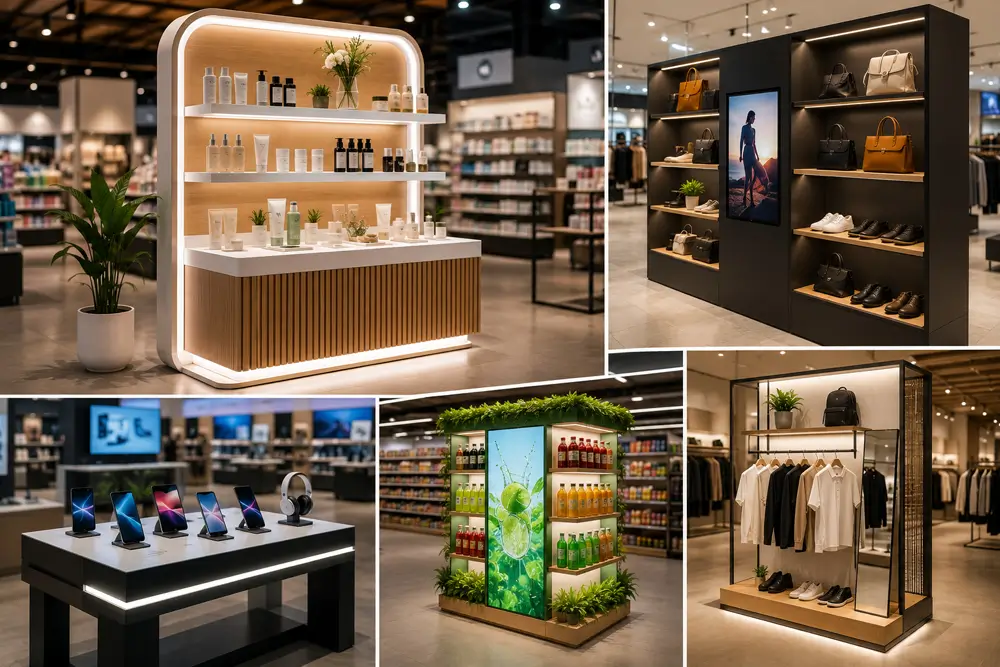
The right product display does more than hold stock. It guides customer flow through your store, frames your best sellers, keeps the floor organised during your busiest hours and communicates brand quality through materials and finish. The wrong display does the opposite: it creates visual clutter, buries products and makes your store harder to navigate.
Here are eight display stand ideas that work across Australian retail categories, with notes on when each approach is most effective.
1. The Hero Product Plinth
Isolating your best-selling or highest-margin product on a dedicated plinth or elevated platform is one of the simplest and most effective display techniques. Elevation creates visual separation, signals importance and allows customers to examine the product from multiple angles. Plinths work across almost every category from cosmetics to electronics to footwear.
For maximum impact, use a plinth that matches or contrasts your brand palette, keep it clear of surrounding products and position it at the natural eye-level of your customer (which differs between adult and children’s retail). A branded riser or light box base adds another level of emphasis.
2. Category Zoning with Display Bays
Dividing your retail floor into distinct category zones using display bays creates a navigable store layout that reduces customer frustration and increases time in-store. When customers can identify where relevant products are from the entrance, they spend their browsing time on products rather than searching. Display bays define zones without requiring heavy fixtures.
Bay systems work best when the dividers are tall enough to create visual separation (1.4m or taller) but not so tall that they block sightlines across the store. Retailers who can see their entire store from the cash register position are better placed to identify browsing customers who need assistance.
3. Point-of-Purchase Countertop Displays
The area immediately around and behind your cash register is the highest-engagement retail space in the store. Customers waiting to pay are a captive, receptive audience for well-chosen add-on products. A small countertop display stand with four to six SKUs of complementary impulse items, positioned within arm’s reach of the register, consistently increases average transaction value.
The key is curation. A countertop display with 40 different products confuses customers. Six items, clearly priced, with a simple display stand that keeps them organised and visible is more effective.
4. Floor Stands for Seasonal or Promotional Products
Freestanding floor displays are the most flexible display format: they can be moved, rotated and changed without modifying fixed shelving. For seasonal ranges, promotional products or new arrivals, a well-positioned floor stand in the natural customer traffic path performs better than identical products shelved in fixed locations.
Floor stands should be self-service: products should be easy to pick up, examine and replace without assistance. If a customer has to ask for help to access a product on a floor stand, the stand is underperforming.
5. Slatwall and Hanging Display Systems
Slatwall panels allow maximum product density on wall space with interchangeable hook and bracket configurations. They’re particularly effective for accessories, jewellery, small packaged goods and categories where customers want to see range variety quickly. A well-organised slatwall display with clear category separation and consistent spacing reads as high-quality even for value products.
6. Branded Display Cubes and Risers
A set of branded cubes or risers at different heights within a display creates visual depth and draws the eye across the full spread of products. This works particularly well for gift, homewares and lifestyle brands where the aesthetics of the display itself communicate brand values. Use your brand palette on the riser surfaces.
7. Entryway Feature Display
The first display a customer sees when they enter your store sets the expectation for everything that follows. A well-designed feature display at the entrance communicating a clear seasonal message, a brand statement or a hero product creates a positive first impression and signals that the brand takes its retail presentation seriously.
Avoid stock overflow at the entrance. The entrance is not for clearance product. It’s your brand’s handshake with every visitor.
8. Window Display Integration
For street-facing retailers, the window display and the interior display should form a connected visual narrative rather than operating as separate presentations. A customer drawn in by the window display should be able to find and purchase the products featured in it within the first ten metres of entering the store.
Frequently Asked Questions
What is the most effective type of retail display stand for increasing sales?
Point-of-purchase countertop displays near the register consistently deliver the highest ROI for add-on sales. Hero product plinths deliver the best results for showcasing individual high-margin items. The right answer depends on your product category and store layout.
How often should retail display stands be refreshed?
Seasonal refreshes every 8-12 weeks keep displays relevant. High-traffic stores benefit from more frequent changes to the entrance and window displays. The goal is that regular customers always see something new when they visit.
How do I design a retail display for a small store?
In small stores, every fixture needs to earn its floor space. Prioritise vertical display over horizontal spread, use your wall space for slatwall systems, and keep your floor stands to a small number of high-impact displays rather than cluttering the floor.
Brij & Co builds custom product display stands and retail display systems for Australian retailers. Contact us for a free consultation.