
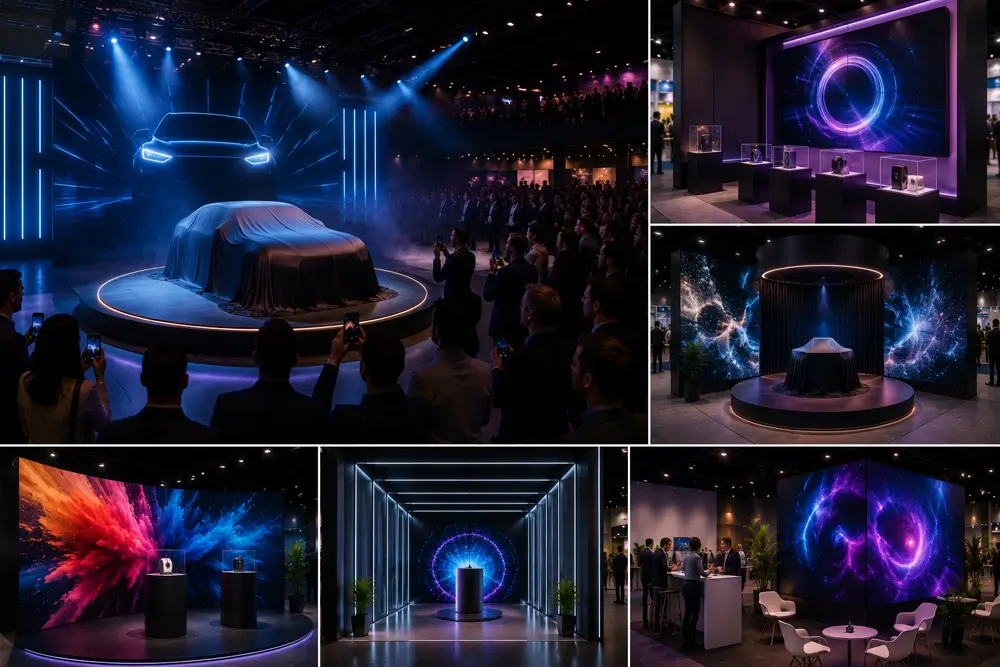
A product launch is a moment. You get one opportunity to introduce your product to the market with the level of impact it deserves, and the physical display environment you create shapes whether the audience walks away with genuine excitement or a forgettable impression.
These product launch display ideas draw from what works at trade shows, in-store events, pop-up activations and purpose-built launch venues.
Create a Hero Display Zone
The product itself should be the undisputed focal point. A raised plinth or backlit podium with clear sight lines from all angles communicates that this is something special before anyone has read a word of copy.
Avoid cluttering the hero display with brochures, data sheets or secondary products. Give the launch product its own space. Visitors and media will naturally gravitate to a well-lit, elevated display because it signals that something worth examining is there.
Use Lighting as a Design Tool
Lighting transforms a product display. Dedicated spotlighting on the hero product, backlit panels that create depth, colour-washed ambient lighting in your brand palette, and LED accent lighting under display plinths all contribute to an atmosphere that generic fluorescent overhead lighting cannot create.
For technology or premium consumer products, a lighting scheme that evolves through the event creates a dynamic environment and adds a sense of occasion that standard static displays miss.
Build a Brand Environment, Not Just a Stand
The most memorable product launches create an environment that immerses the visitor in the brand world rather than just presenting a product in a neutral space. This means consistent colour application from floor to ceiling, materials that reflect brand values (warm timber for a natural product, polished surfaces for a technology brand), and sensory elements like sound design or scent.
Even modest environments can feel intentional and immersive if the design decisions are coherent. A single strong brand colour, used consistently across walls, furniture, staff clothing and printed materials, creates a more powerful impression than a more expensive but incoherent environment.
Include a Live Demonstration Component
A product that can be seen working is a product that sells itself. Schedule live demonstrations at regular intervals throughout the event and promote the demonstration times on arrival signage and digital displays.
For products that cannot be demonstrated live, a high-quality product video on a large-format screen is an effective alternative. Invest in the production quality. A professionally filmed product video with clear audio plays well in a large-format display environment; a smartphone video does not.
Design for Social Sharing
Every product launch event should include at least one element that guests will photograph and share on social media. A custom installation, a brand-appropriate visual backdrop, a product display that is itself photogenic, or a unique interactive element can generate significant earned media if it is designed with sharing in mind.
Install a clear, recognisable brand element (your logo, product name or campaign hashtag) in the natural photo background for any highly shareable element.
Interactive and Hands-On Displays
Where the product allows it, let guests handle it. Touch, weight, texture and interaction create a physical memory that passive viewing does not. A hands-on display requires careful consideration of traffic management and product protection, but the quality of engagement it produces is significantly higher than a display-only environment.
For products where full interaction is not possible (fragile, high-value, or at prototype stage), consider interactive digital overlays, augmented reality demonstrations or scale models.
Plan the Flow
Physical flow through the event space should be deliberate. Guests should naturally move from the arrival experience through a brand context area, past the product introduction moment, into a hands-on or demonstration zone, and finally toward a conversation and follow-up area.
Poorly planned layouts create congestion at popular points and empty spaces elsewhere. Sketch the intended visitor path before finalising the floor plan.
Frequently Asked Questions
How much does a product launch display cost?
Costs vary widely based on event scale, venue and display complexity. A professional stand-based product launch display starts around $8,000-$15,000. A full custom event environment can run from $30,000 upward. The critical factor is matching investment to the commercial value of the launch.
Can a product launch display be reused?
Yes, with planning. A modular display system designed for the launch can be reconfigured for trade shows, retail displays or subsequent events. Build this flexibility into the brief from the outset.
What size space do I need for a product launch event?
Allow a minimum of 4-6sqm per 10 concurrent guests for a comfortable event environment. Add space for the hero product display, demonstration area, media wall and any catering or conversation zones.
How do I make a product launch display stand out?
Start with the hero product as the absolute focal point. Use professional lighting. Maintain visual coherence across all elements. Include at least one interactive or live component. Design one photographable moment that encourages social sharing.
Can Brij & Co design product launch displays?
Yes. We design and build product launch environments for Australian brands alongside our exhibition and retail display work. Contact us for a product launch display quote
What is the difference between a product launch display and a trade show stand?
A product launch display is designed to focus entirely on one new product and create a memorable moment. A trade show stand often presents a range of products or services across multiple conversations. The design principles differ accordingly.
Make Your Launch Unforgettable
Brij & Co designs and builds product launch environments, event displays and exhibition stands across Australia. Contact our team to discuss your upcoming product launch.