
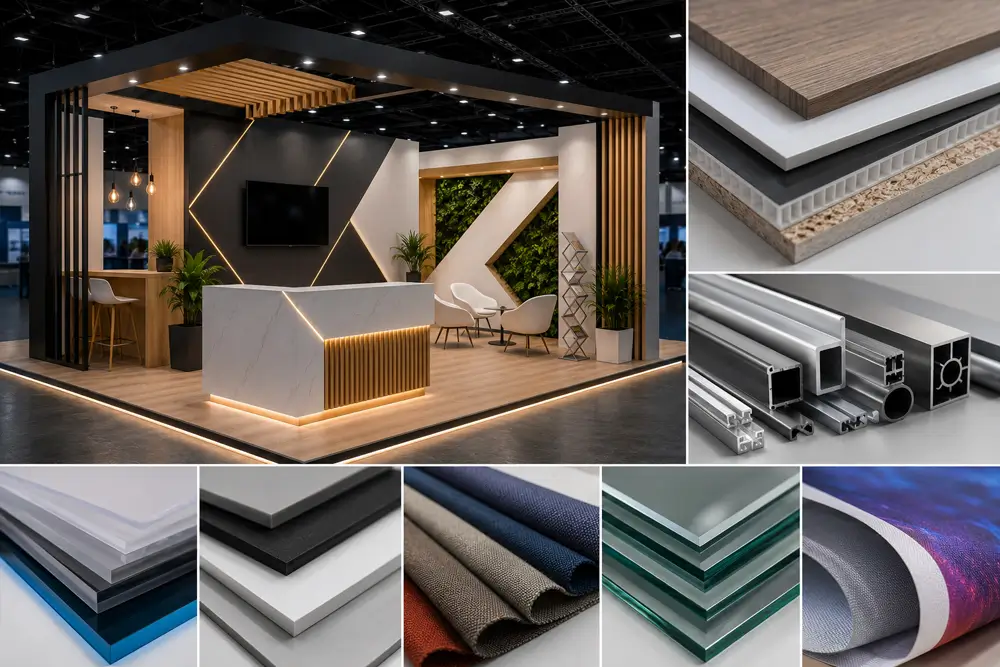
The materials that make up your exhibition stand determine how it looks, how long it lasts, how heavy it is to transport, and how much it costs. Understanding the key options helps you make informed decisions when briefing a builder, and helps you evaluate quotes that specify different material approaches.
Structural Framework Materials
Aluminium Extrusion
Aluminium extrusion systems are the most widely used framework for modular exhibition stands. Lightweight, strong, and endlessly reconfigurable, aluminium systems can be assembled and disassembled without tools or with simple hand tools. The profile range available allows frames for walls, counters, display cases, lighting structures and suspension systems.
Aluminium is highly durable and resists corrosion. A well-maintained aluminium frame will last ten or more years of regular exhibition use.
Timber and MDF
Timber and MDF (medium density fibreboard) are used for custom cabinetry, display cases, counters, feature walls and shelving within exhibition stands. They can be finished in paint, veneer, laminate or high-pressure lacquer to produce premium results.
The limitation of timber and MDF is weight and single-use tendency. Custom joinery is typically not designed to be disassembled and reassembled, making it more suitable for high-quality one-time builds than for frequently reconfigured stands.
Steel
Steel is used where structural rigidity is essential: large freestanding displays, double-decker upper floors, heavy product display platforms and custom structural features. Steel is the heaviest common exhibition material and requires engineering sign-off for structural applications.
Wall and Panel Materials
Tension Fabric Systems
Tension fabric uses printed fabric panels stretched over aluminium frames to create wall surfaces. The system is lightweight, packs efficiently, produces seamless full-colour graphics, and allows panel replacement between events without replacing the frame.
Tension fabric is currently the most popular wall material for professional exhibition stand design in Australia. The graphic quality at close viewing distance is generally good for normal resolution photography and bold text.
PVC and Foam Board Graphics
Printed PVC and foam board panels produce high-resolution flat graphics for wall surfaces, counters and display areas. They are typically single-use or low-reuse materials. Foam board is extremely lightweight and affordable for one-time applications.
Solid Panel Systems
Powder-coated aluminium or steel solid panels provide a premium, durable wall surface for modular stands. They can be finished in custom colours, timber veneer wraps or other surface treatments. More expensive than fabric systems but more durable and reusable over many years.
Flooring Materials
Interlocking Foam Tiles
Affordable, lightweight, easy to install and easy to transport. Available in a range of colours and surface finishes. Good for stands where floor coverage is required but premium finish is not critical.
Commercial Carpet Tiles
A premium option for corporate and professional environments. Can be cut to size and configured in patterns. More weight and pack size than foam tiles.
Printed Floor Graphics
Vinyl floor graphics can be applied directly to the exhibition hall floor to define your stand space and reinforce branding. They are peeled up after the show. Some venues restrict their use; check the exhibitor manual.
Graphic Printing Options
Large-format digital printing onto fabric, PVC, rigid substrate or specialty media produces the visual content of your stand. Key variables are resolution (typically 100-150dpi at output size for viewing distances over 1 metre), colour gamut (CMYK for print), and durability.
Fabric graphics have largely displaced vinyl for backwall applications due to lighter weight, better packability and superior appearance. Vinyl and rigid prints remain preferred for specific applications where colour accuracy or surface finish requirements suit the substrate.
Frequently Asked Questions
What is the most durable exhibition stand material?
Powder-coated aluminium structures with solid panel infills are the most durable commonly available combination. Properly maintained, these systems can provide fifteen or more years of exhibition service.
What is the lightest exhibition stand material?
Tension fabric systems using aluminium extrusion frames are among the lightest. A complete 3×3 backwall and frame can pack into a single bag and weigh under 10kg.
How do I choose between fabric and rigid panel graphics?
Fabric is preferable for large backwalls and curved surfaces. Rigid panels are preferable for product display applications, high-resolution close-viewing graphics, and surfaces that need to withstand physical contact. Your builder can advise based on your specific requirements.
Can exhibition stand materials be recycled?
Aluminium is highly recyclable. Fabric graphics from recycled PET are available and are themselves recyclable. Timber MDF has limited recycling options. Choosing aluminium and fabric maximises end-of-life recyclability. Modular exhibition stands
What materials are used for a premium exhibition stand finish?
Premium finishes typically combine powder-coated or anodised aluminium, timber veneer or high-pressure laminate panels, backlit fabric or acrylic, and LED integrated lighting. The combination of quality materials with professional fabrication creates a finish comparable to high-end retail fitout.
Does Brij & Co advise on material selection?
Yes. Material selection is a core part of our design and quoting process. We recommend the right materials for your budget, durability requirements and aesthetic goals. Contact our team
Material Decisions That Shape Your Stand’s Performance
Brij & Co specifies and sources exhibition stand materials across the full quality range. Contact our team to discuss the right material specification for your next stand.